Back Bay brownstones in Boston: a guide to selling and buying
A practical guide to selling and buying brownstone homes in Back Bay: whole townhouses and condos, Arlington Street to Charlesgate.
Where to start
Selling your brownstone
How pricing works by street and floor, the documents to gather early, and what selling costs in Massachusetts.
Selling a Back Bay brownstoneBuying in Back Bay
Comparing streets, floors and buildings, and checking condo finances, parking rights and past approvals before you offer.
Condos in Back Bay brownstonesPlanning the costs
Boston property tax and the residential exemption, closing costs, and financing above the conforming limit.
Boston property tax guideRequest a private valuation
Send the address and unit for a written valuation based on recent sales on your street. Your request goes to Susana Murphy, our recommended Back Bay agent. Nothing is published, and there's no obligation to list.
Prefer to talk? Call (508) 746-0033
Back Bay streets
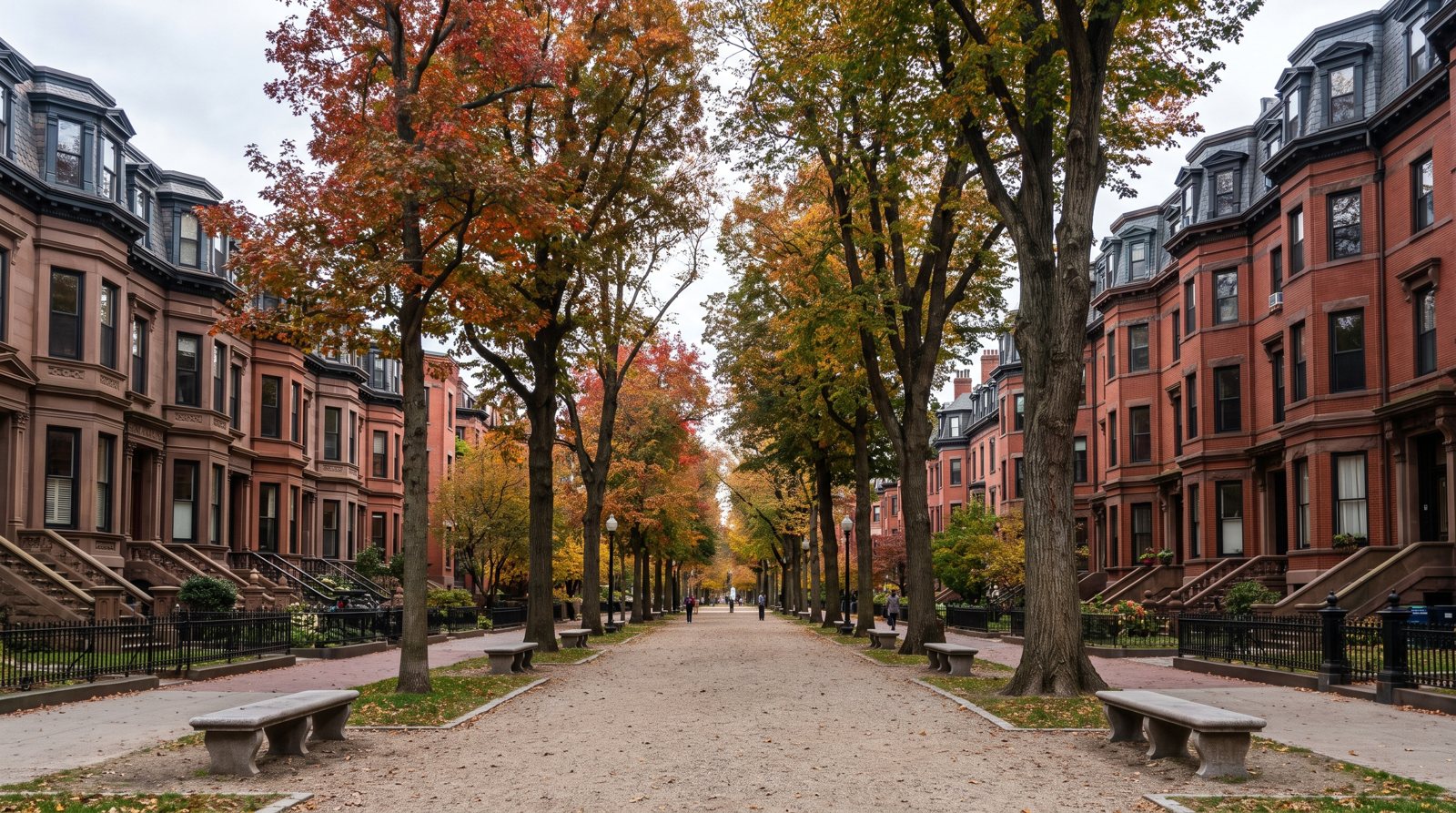
Commonwealth Avenue
Commonwealth Avenue's Back Bay stretch runs nine blocks from the Public Garden at Arlington Street to Charlesgate East: a 200-foot boulevard split by a 100-foot central Mall, lined with houses on the deepest lots in the residential grid (124.5 feet).
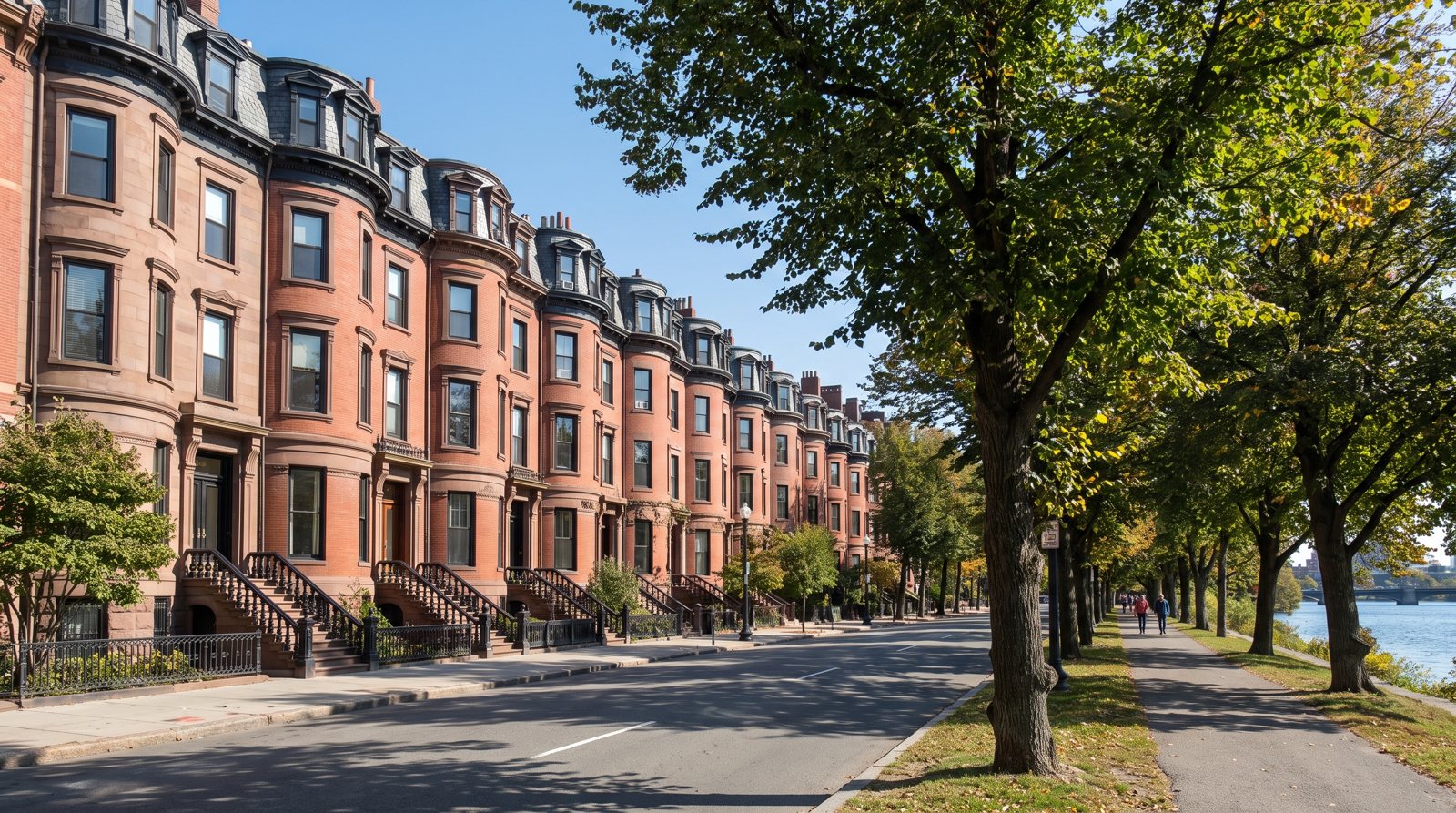
Beacon Street
In the Back Bay, Beacon Street runs nine blocks from Arlington Street to Charlesgate East along the line of the 1814 Mill Dam, with house numbers from about 100 to 535.
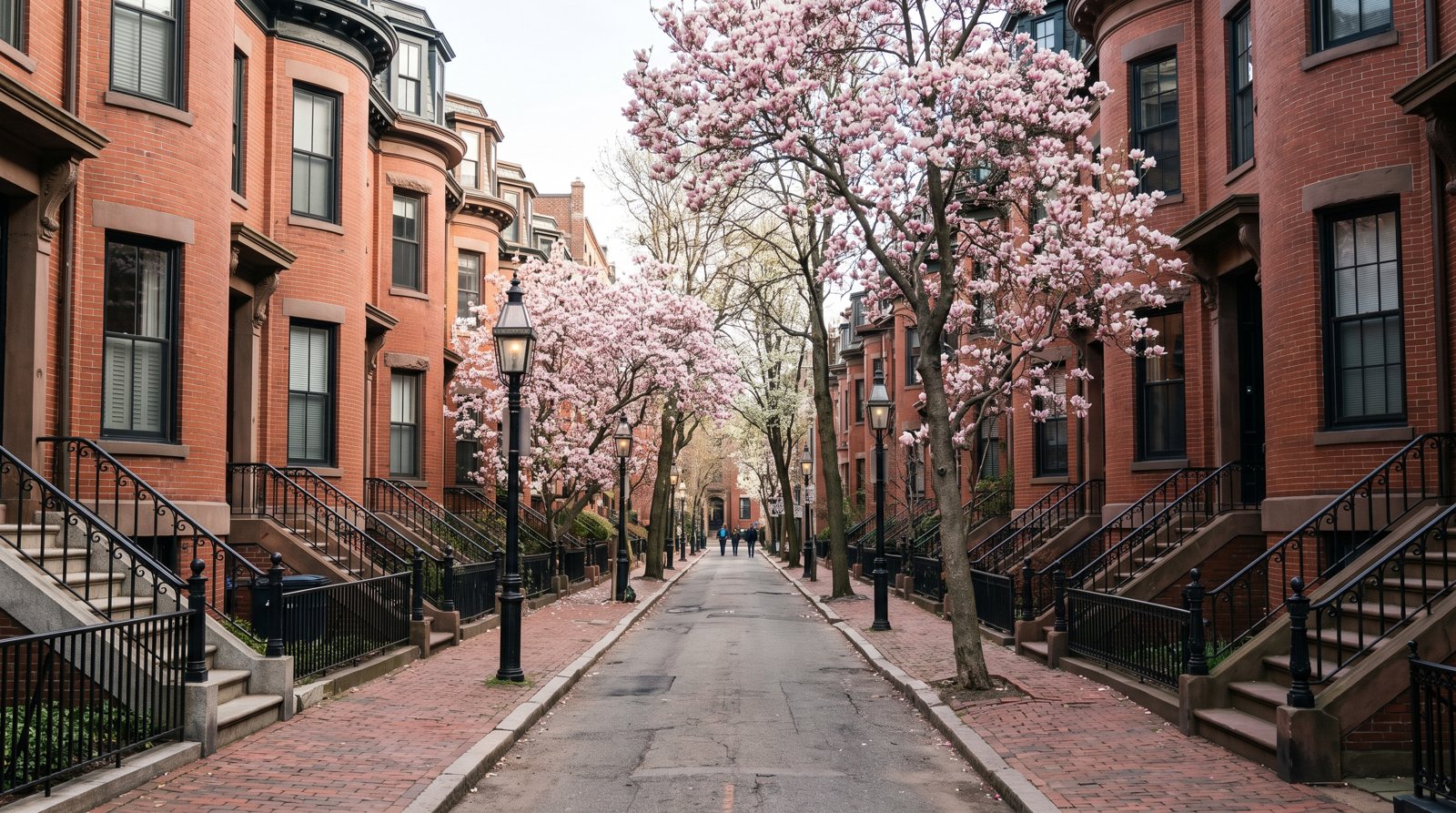
Marlborough Street
Marlborough Street is the Back Bay's 60-foot residential street between Beacon Street and Commonwealth Avenue, running nine blocks from Arlington Street to Charlesgate East with house numbers from 1 to about 459.
Newbury Street
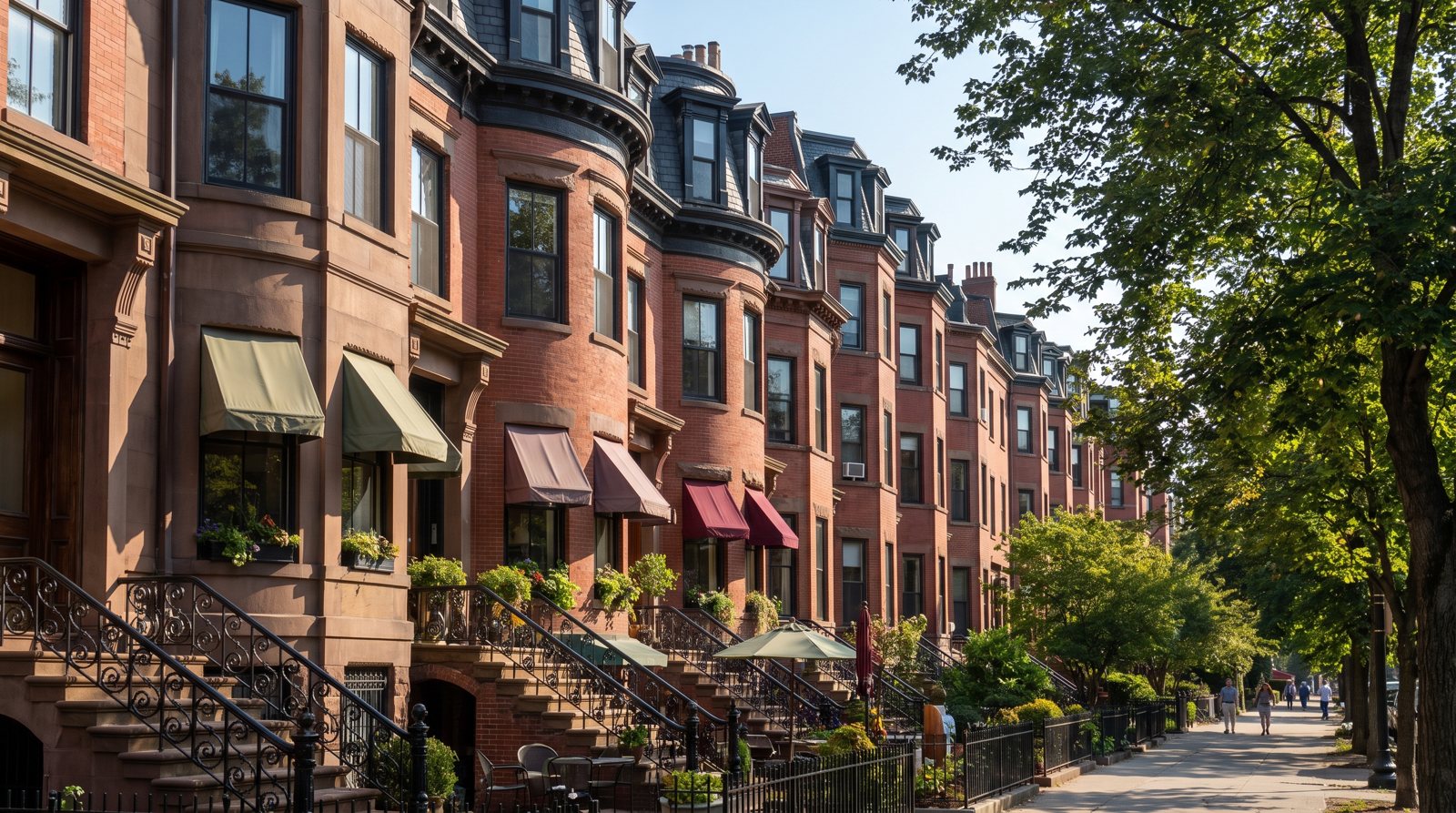
Newbury Street is known for its retail shops and restaurants, which fill about a mile of 19th-century buildings east of Massachusetts Avenue, but many of those buildings still hold homes, typically condominiums on the upper floors.
Market data
Zillow Home Value Index (typical home value), August 2026; Freddie Mac PMMS, week of 10/1/2026; City of Boston Assessing.
Back Bay housing marketOur recommended Back Bay agent
When you are ready to sell, we recommend Susana Murphy of ALANTE Real Estate. Our recommendation page sets out why, with the sales, reviews and credentials behind it.
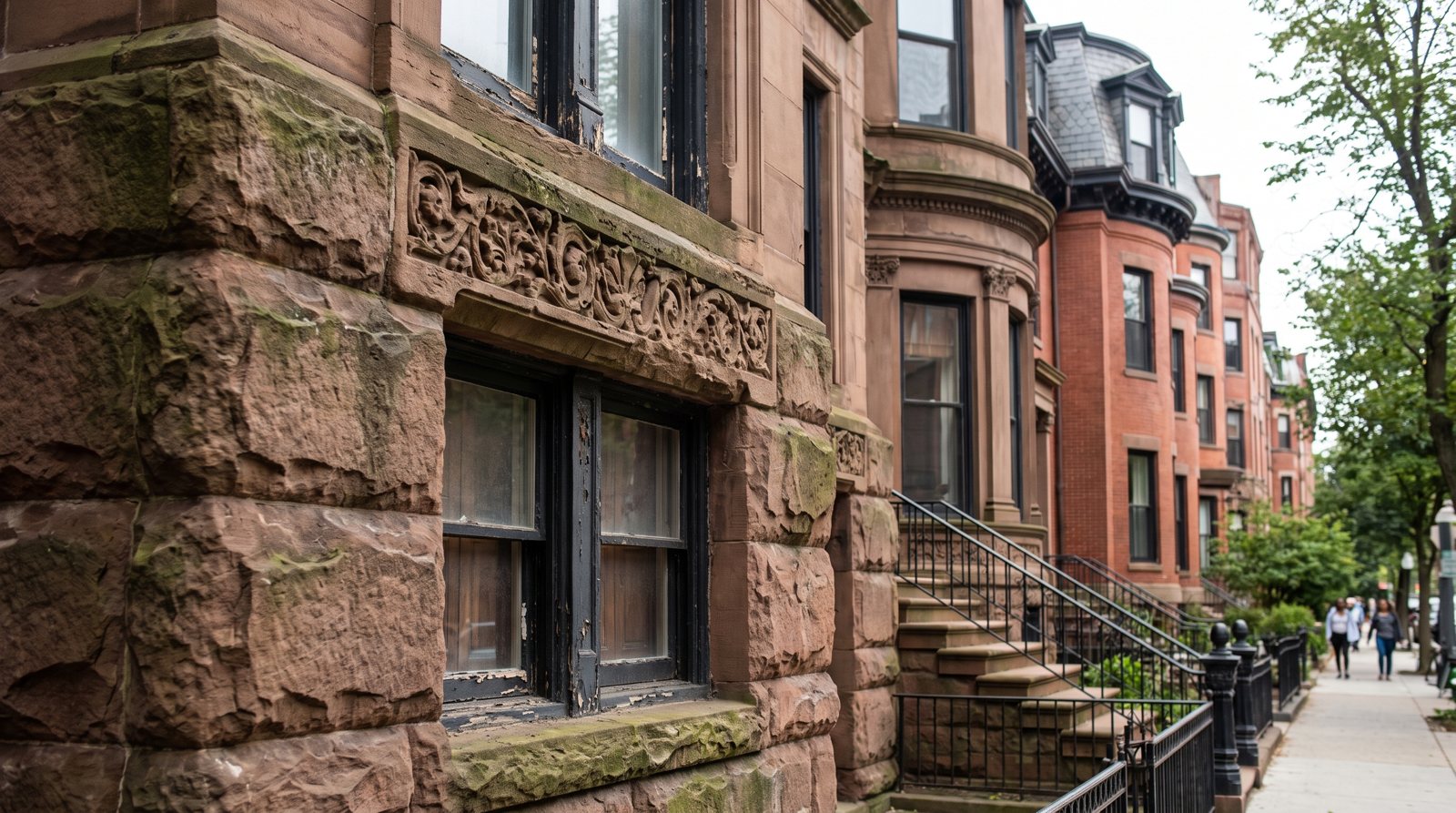
Built on filled land
Back Bay was made by filling tidal flats along the Charles River in the second half of the 1800s. Many of its houses stand on wood piles that need to stay below groundwater, which the Boston Groundwater Trust monitors.
Back Bay history and architectureBuying or selling a Back Bay brownstone
What is a Back Bay brownstone today?
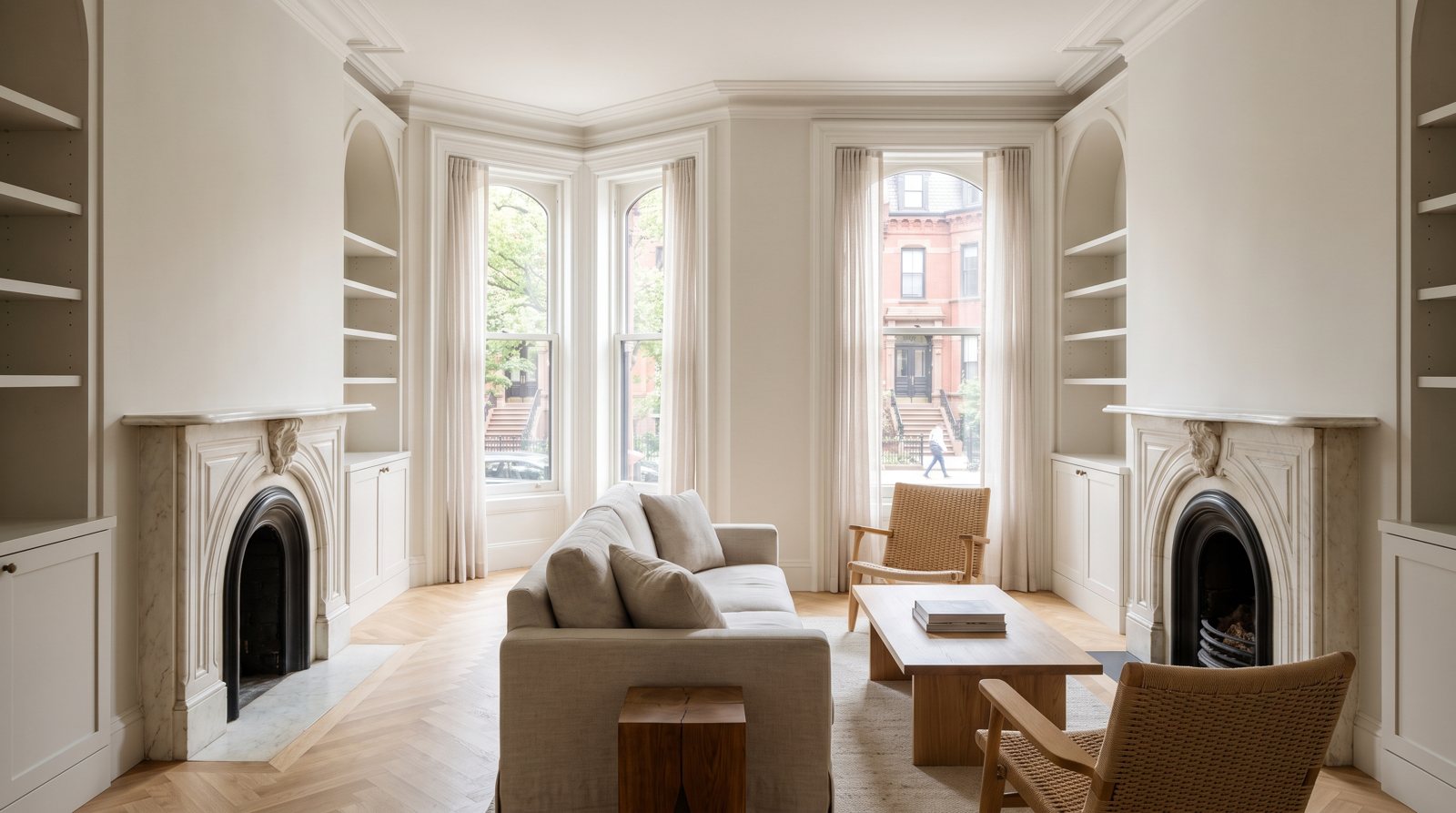
On this site, "brownstone" means Back Bay's 19th-century rowhouses in the everyday sense of the word. Back Bay Houses counts 1,156 buildings put up on the originally vacant lots of the residential Back Bay, most of them built as single-family houses between the 1850s and the early 1900s. The original deeds required brick, stone or other non-combustible material and at least three stories, which is why the blocks read as continuous masonry walls.
A condo inside a converted house
After World War I many houses became lodging houses, apartments, dormitories or offices. Boston's first conversion of an existing residential building to condominiums took place in the Back Bay in November 1969, and Back Bay Houses calls condo conversion probably the single most important innovation in keeping the original buildings in residential use. A unit can be a single floor, a duplex, a garden level or a top floor; condos in Back Bay brownstones compares them.
A whole single-family house
Some houses have been converted back from apartments to single-family use in recent decades, though Back Bay Houses gives no count. A whole house means sole control of the building and sole responsibility for its roof, facade and foundation. Whole-house townhouses in Back Bay covers what single-family means here.
Brick or brownstone?
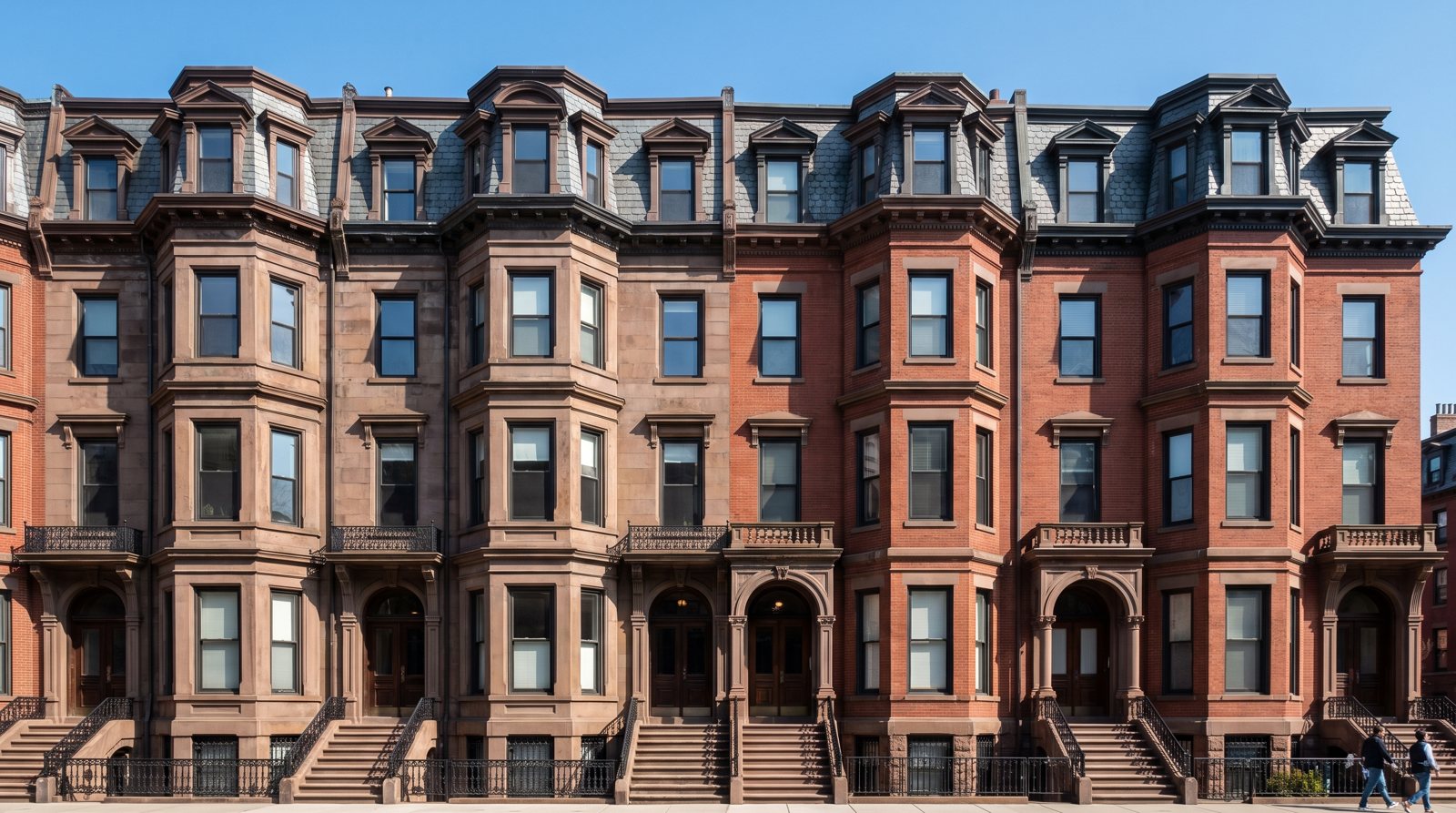
Many Back Bay houses are red brick with brownstone trim rather than solid brownstone fronts. The Gibson House museum on Beacon Street, an early example, has brownstone at the basement and first floor and red brick with brownstone trim above, under a mansard roof. No source gives the share of houses faced in brownstone, so judge each facade on its own; what makes a house a brownstone explains the stone and the term, and how Boston's brownstone neighborhoods compare sets Back Bay beside Beacon Hill and the South End.
Back Bay brownstones street by street
The 1856 plan laid out five east-west streets (Beacon, Marlborough, Commonwealth, Newbury and Boylston) crossed by north-south streets named in alphabetical order from Arlington to Hereford. The residential blocks run from Arlington Street west to Charlesgate East. The overview of Back Bay's streets compares every street; the main ones are below.
Beacon Street
Beacon follows the line of the 1814 Mill Dam and was planned 70 feet wide. Houses on its north side back onto the Esplanade and the Charles River, and the first Back Bay houses went up on that side between Arlington and Berkeley in 1856 and 1857. See Beacon Street brownstones.
Marlborough Street
Marlborough was planned 60 feet wide with a 22-foot front setback on each side, and its lots are 112 feet deep. It runs nine blocks between Beacon and Commonwealth, from Arlington Street to Charlesgate East. See homes on Marlborough Street.
Commonwealth Avenue
Commonwealth is a 200-foot boulevard with a 100-foot central mall running from the Public Garden to the Back Bay Fens. Its lots are 124.5 feet deep, and the 1890s apartment houses and apartment hotels clustered here and at the western end. See Commonwealth Avenue homes.
Newbury Street
Newbury was planned 60 feet wide, and the Architectural Commission treats the area south of the alley between Commonwealth and Newbury as the district's commercial portion. Its former houses are now largely in commercial or mixed use, so check a building's uses before buying a unit there. See living on Newbury Street.
The cross streets and Charlesgate East
The north-south streets had no front setback requirement in the original deeds, and Arlington Street was created 80 feet wide facing the Public Garden. At the western edge, Charlesgate East looks onto the Back Bay Fens, now largely hidden by the Bowker overpass built in 1966.
What drives the price of a Back Bay brownstone?
Zillow publishes no street or building values, so its figures are background only: in August 2026 its typical home value for the Back Bay neighborhood was $1,340,764, down 2.2% over 12 months. Between two homes, compare the factors below.
Street and block
Compare a home with recent sales on the same street and, ideally, the same block. Lot depths differ (124.5 feet on Commonwealth, 112 feet on Marlborough and the south side of Beacon), so the size of the house and rear yard behind a facade differs by street.
Floor
In a converted house, a garden-level unit, a middle floor and a top floor are different products. Confirm which floor each comparable sale was on, and ask for floor plans, before you lean on it.
Light
Light depends on which way the rooms face, the width of the street and what stands across it or behind it. Commonwealth's 200-foot width puts facing houses far apart; Beacon's 70-foot width does not. Visit at different times of day rather than relying on listing photos.
Outdoor space
Outdoor space here means a front garden in the setback, a rear yard or deck toward the alley, or a roof deck. The Commission wants roof decks minimally visible from any public way, set back to the inward edge of the chimneys and fitted with ornamental iron railings. Ask whether a deck was approved; Certificates of Appropriateness are valid for one year.
Parking
Parking is scarce and sold on its own terms. A 2024 Boston Globe report described an outdoor Back Bay alley space that sold for $250,000 and a nearby space that sold for $385,000; these are press reports, not typical values. Confirm whether a space is deeded, a limited common area or leased, and see parking in Back Bay for permits and garages.
Condo finances
Massachusetts requires every condominium to keep an adequate replacement reserve. One Massachusetts real estate attorney suggests, as a rule of thumb, a reserve of at least 10% of the annual budget and more for older buildings, and a thin reserve raises the risk of a special assessment. Read the budget and minutes before comparing two prices.
Costs beyond the purchase price
Property tax
Boston's FY2026 residential rate is $12.40 per $1,000 of assessed value. An owner-occupied $1,500,000 assessment pays $14,246.26 a year with the residential exemption and $18,600 without it, plus the Community Preservation Act surcharge. FY2027 rates are set in December 2026; the Boston property tax guide explains the exemption.
Condo fees and special assessments
The monthly common charge funds the building's shared costs and its reserve. Ask the trust for the current fee and any planned special assessment, and read the 6(d) certificate and condo documents before you sign.
Closing costs
Suffolk County's deed excise is $4.56 per $1,000 of the price, or $6,840 on a $1,500,000 sale. Attorneys, title insurance, lender fees and recording add more; see closing costs in Massachusetts.
Jumbo financing
FHFA's 2026 one-unit conforming limit for Suffolk County is $962,550, so with 20% down any price above about $1,203,000 needs a jumbo loan. Freddie Mac's 30-year fixed average was 7.28% in the week of October 1, 2026. Read about jumbo loans in Massachusetts.
Exterior work
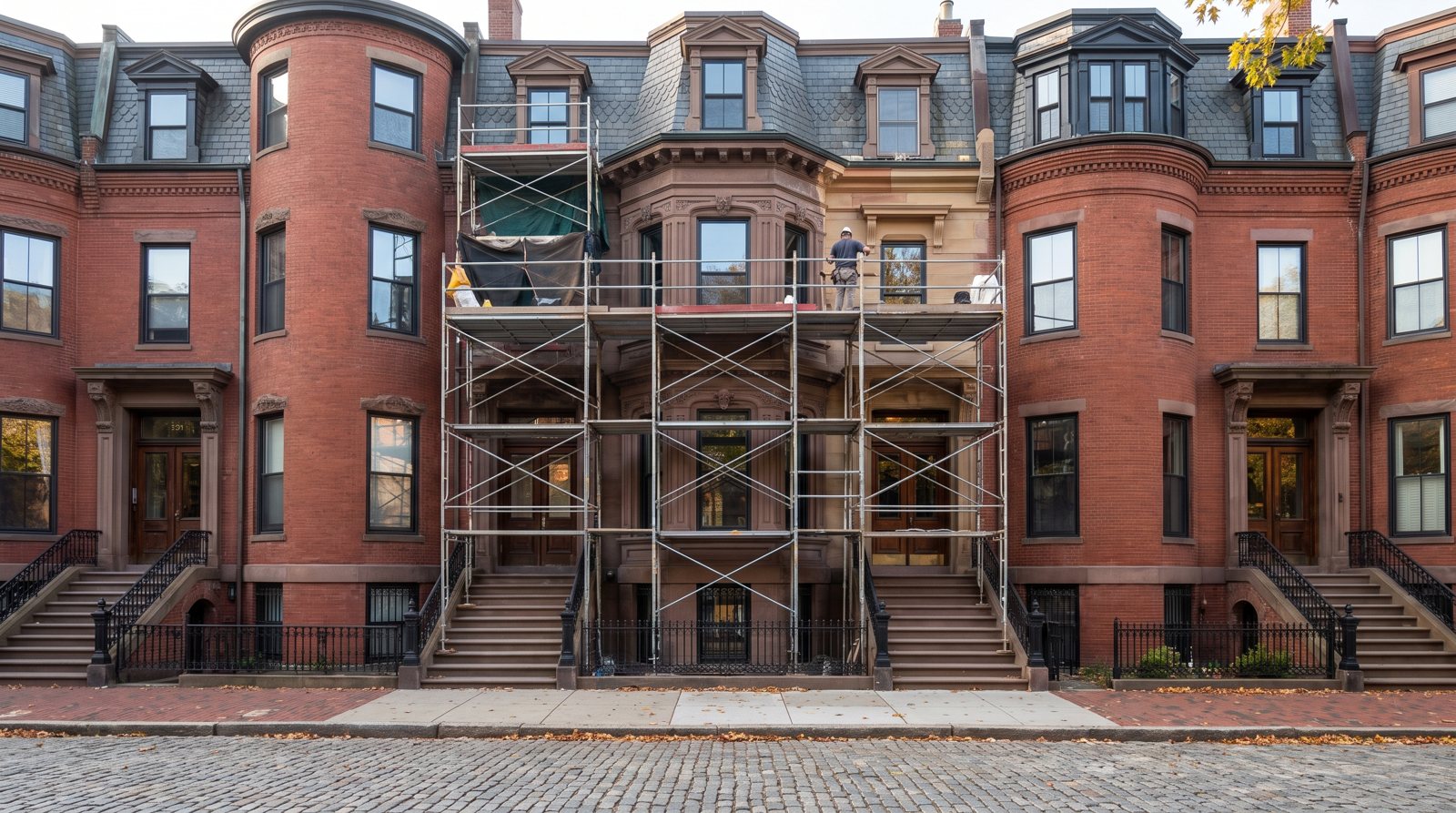
The Back Bay Architectural Commission reviews all proposed exterior work, even alterations not visible from the street, and approves nothing while violations remain open on a property. Renovating a Back Bay brownstone covers windows, masonry and roof decks.
Lead paint
The original houses predate 1978, so the federal lead disclosure rule applies when they sell, and Massachusetts requires deleading when a child under six lives in the home. See the Massachusetts lead paint law for letters of compliance and the deleading tax credit.
How a home sale works in Massachusetts
Every sale passes through the same legal steps. If you own a home here, what selling a Back Bay brownstone involves goes into each one.
Valuation
A valuation compares the home with recent sales on the same street and floor, then adjusts for light, outdoor space, parking and condition. Zillow's ZIP figures are background, not a price.
Documents
For a condo, request the 6(d) certificate early: the trust must furnish it within ten business days of a written request. Gather the master deed, budgets, minutes, any lead reports and Commission approvals for past exterior work.
Listing
In the residential district, Commission rules allow one temporary marketing sign per building, up to 6 square feet, unlit and for six months (renewable).
Offer
Before a buyer signs the purchase and sale agreement, the seller must give the state lead notification and any letters of interim control or full compliance. A buyer who wants a lead inspection gets ten days, or longer if both sides agree.
Purchase and sale agreement
The agreement sets the price, deposit, financing terms and closing date. Once it is signed, book the Boston Fire Department smoke and carbon monoxide inspection, which needs at least 10 business days' notice.
Closing
At closing the deed is recorded at the Suffolk County Registry of Deeds ($155 for a deed), the deed excise is paid by separate check to the Commonwealth, and a condo's 6(d) certificate is recorded to clear liens for unpaid charges. For the seller's side in more detail, read pricing and selling your home.
Back Bay brownstone questions
Is Back Bay the richest neighborhood in Boston?
Measured by home values only, Back Bay sits well above the city as a whole. Zillow's typical home value for the Back Bay neighborhood was $1,340,764 in August 2026, against $1,105,539 for Beacon Hill, $1,080,575 for the South End and $774,723 for the City of Boston. These are typical values for all homes, not incomes, and this site does not rank every Boston neighborhood.
What is the wealthiest neighborhood in Boston?
This site answers with home values, not incomes. Of the areas it tracks, the highest Zillow typical home value in August 2026 was ZIP 02199, the Prudential Center area, at $3,619,095, but that ZIP is dominated by towers rather than brownstones. Among the three historic rowhouse neighborhoods, Back Bay led at $1,340,764.
Where are the best brownstones in Boston?
Boston's 19th-century rowhouses cluster in three historic districts: Back Bay, Beacon Hill and the South End. Which is best depends on the home you want. Back Bay has the planned 1856 grid and the Commonwealth Avenue Mall; Beacon Hill has older Federal and Greek Revival houses; the South End has long uniform Victorian rows. The Boston brownstones page compares them.
Is Back Bay a nice neighborhood in Boston?
Judge it on facts. Walk Score rates Back Bay 97 for walking and 96 for transit. The Public Garden, established in 1837, is at its eastern edge, the Commonwealth Avenue Mall runs through it, and the Charles River Esplanade lies behind Beacon Street. Many homes are condos in 19th-century rowhouses under Architectural Commission rules, which limit exterior changes.
How much does a Back Bay brownstone cost?
Zillow publishes no brownstone-only figure. Its typical home value in ZIP 02116, Back Bay's main ZIP, was $1,298,982 for condos and $1,818,983 for single-family homes in August 2026. Individual prices depend on street, floor, light, outdoor space, parking and the building's finances, so compare recent sales on the same block before relying on any average.
Are Back Bay brownstones condos or single-family houses?
Both. Most Back Bay houses were built as single-family homes, many became apartments or lodging houses after World War I, and Boston's first condo conversion of an existing residential building happened in the Back Bay in 1969. Today you can buy a condo inside a converted house or, where one comes to market, a whole house that has stayed or returned to single-family use.